Published on May 20, 2026
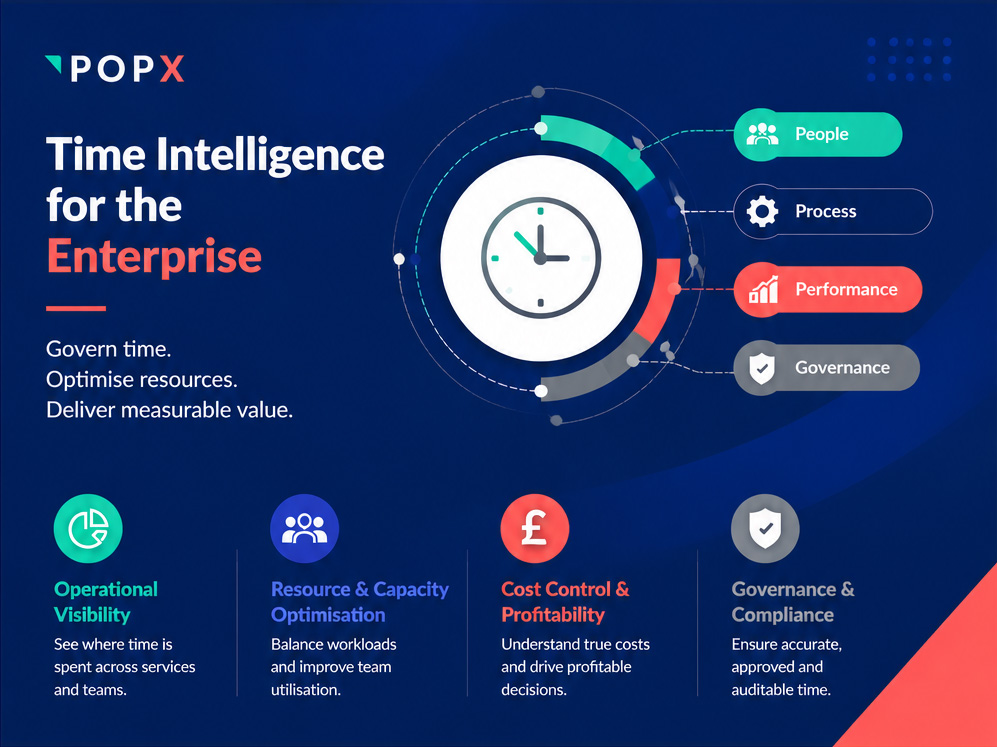
For many organisations, time recording is still viewed as an administrative necessity, something required for reporting, governance or billing. But enterprise businesses using ServiceNow are increasingly recognising that effective time management can deliver far greater strategic value.
When implemented properly, time recording becomes a powerful operational intelligence tool. It provides enterprise IT and service teams with deeper visibility into workload distribution, service delivery efficiency, operational costs, resource utilisation and long-term planning.
Rather than simply tracking hours, organisations can use time data to make informed business decisions based on measurable effort, performance and service outcomes.
Turning ServiceNow Data into Enterprise-Level Insight
Most enterprise organisations already rely on ServiceNow to manage Incidents, Requests, Cases, Changes and Projects. However, many still lack clear visibility into the actual effort required to deliver and support those services.
Consistent time recording closes this gap.
Once accurate time data is captured across teams, organisations can begin answering critical operational and strategic questions, including:
- Which services consume the highest levels of support effort?
- Where are operational bottlenecks impacting delivery?
- Are support teams appropriately resourced?
- Which business units or customers require disproportionate levels of support?
- How accurately are internal costs and external services being measured?
- Where can automation or process optimisation reduce manual effort?
This level of visibility enables enterprise leaders to move beyond assumptions and base decisions on reliable operational data.
Improving Cost Transparency and Service Governance
One of the most valuable benefits of structured time management is improved cost transparency.
By associating logged time with cost models, organisations can understand the true effort involved in delivering services, supporting customers and maintaining operational processes.
For enterprise organisations, this creates opportunities to:
- Improve service costing and financial governance
- Validate customer billing and managed service agreements
- Identify resource-intensive services or departments
- Support budget planning with accurate operational data
- Measure the impact of transformation initiatives
- Uncover inefficiencies affecting productivity and delivery
Enterprise leaders can use this information to strengthen financial planning, improve accountability and support data-driven investment decisions.
Supporting Enterprise Resource Planning and Team Utilisation
Enterprise organisations often manage complex support structures across multiple teams, departments and regions. Without accurate time data, understanding true capacity and utilisation becomes extremely difficult.
Consistent time recording within ServiceNow provides clear visibility into how teams are spending their time and where operational pressure exists.
This helps organisations:
- Identify overloaded or underutilised teams
- Support workforce and recruitment planning
- Improve workload balancing across departments
- Understand the impact of new services or customers
- Reduce inefficiencies caused by manual processes
- Improve operational resilience
Time data can also highlight hidden service delivery issues.
For example, tickets that remain open for extended periods with minimal recorded effort may indicate process blockers, approval delays or inefficient workflows affecting resolution performance.
Flexible Time Recording Approaches for Different Enterprise Needs
One of ServiceNow’s biggest strengths is its flexibility.
Enterprise organisations rarely operate with a single process across every team, which means time management solutions need to adapt to different operational requirements.
Some organisations prioritise lightweight and automated time capture to maximise user adoption. Others require structured time entry processes to support billing, governance or compliance reporting.
ServiceNow supports a range of approaches, including:
- Automated time capture during ticket activity
- Manual time entry directly within task forms
- Prompted time recording during updates
- Dedicated time entry actions
- Structured timesheet portals and workflows
- Billable and non-billable categorisation
- Rate card and project-based tracking
The right approach depends on the balance between operational simplicity, reporting requirements and the level of governance needed across the organisation.
Streamlining Timesheet Governance and Approval Processes
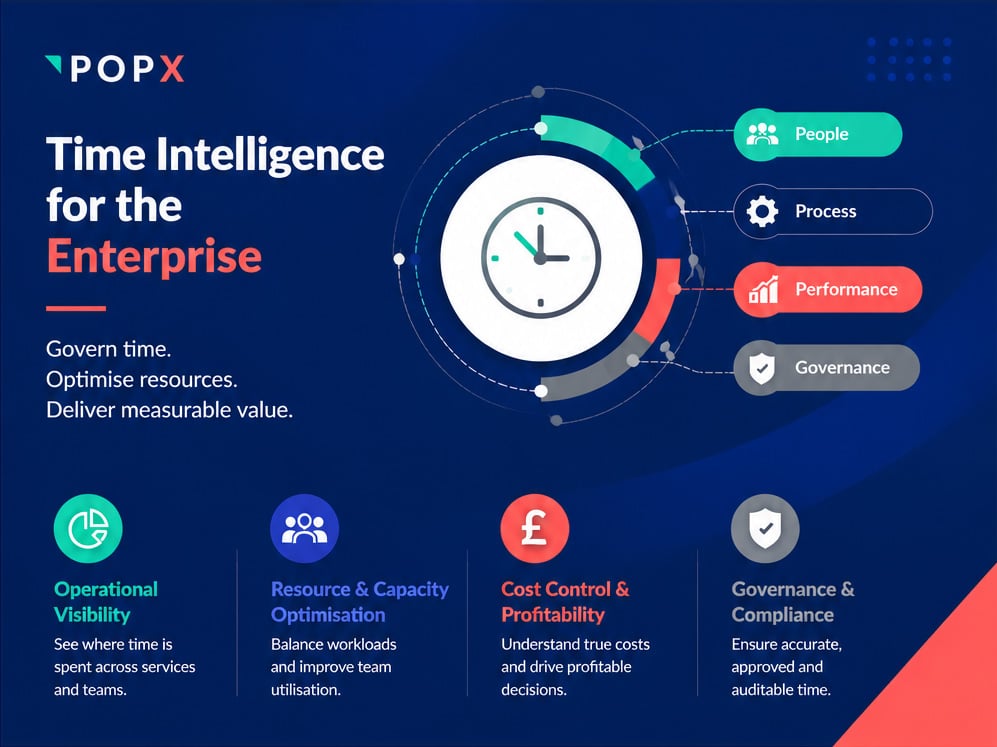
Time recording becomes significantly more valuable when supported by clear governance and approval workflows.
ServiceNow’s native timesheet capabilities allow organisations to manage both project and operational time while also supporting non-ticket activities such as meetings, training, administration and leave.
Approval workflows can be tailored to align with enterprise operating models. For example:
- Project-related time can route to project managers
- Operational time can route to line managers
- Certain activities can be auto-approved
- Approval policies can vary across departments or regions
- Escalation rules can support governance and compliance requirements
This flexibility helps organisations maintain oversight without introducing unnecessary complexity for end users.
Unlocking More Advanced Reporting and Analytics
Once time data is consistently captured, ServiceNow reporting and analytics capabilities become significantly more powerful.
Enterprise organisations can build dashboards and reports that provide visibility into:
- Team utilisation trends
- Effort by service or business unit
- Cost per ticket or request
- Customer support consumption
- Project effort and delivery performance
- Forecasting and capacity planning
- Operational efficiency trends over time
Using Platform Analytics and Performance Analytics, organisations can identify recurring operational issues, track improvements and support continuous service optimisation.
The result is a more proactive and data-driven approach to enterprise service management.
Building a Sustainable Enterprise Time Management Strategy
Successful enterprise time management is not about forcing teams through complex administrative processes.
The most effective ServiceNow implementations focus on creating a process that supports the way teams actually work while still delivering meaningful operational insight.
Typically, successful organisations prioritise:
- Reducing friction for end users
- Automating time capture wherever possible
- Capturing meaningful and actionable data
- Creating efficient approval workflows
- Using reporting to support operational improvement
- Aligning time management with wider service governance strategies
When implemented strategically, time recording becomes far more than a compliance exercise.
It becomes a key operational capability that helps enterprise organisations improve service delivery, optimise resources, strengthen governance and gain deeper insight from their ServiceNow platform.
If your organisation is exploring how to improve operational visibility and service governance within ServiceNow, POPX Enterprise can help design a time management approach tailored to your teams, processes and reporting requirements.